Certified Cycler
The Nitrogen Cycle
Why new tanks kill fish, and how to make sure yours never does
Section 1 of 8
What the nitrogen cycle is
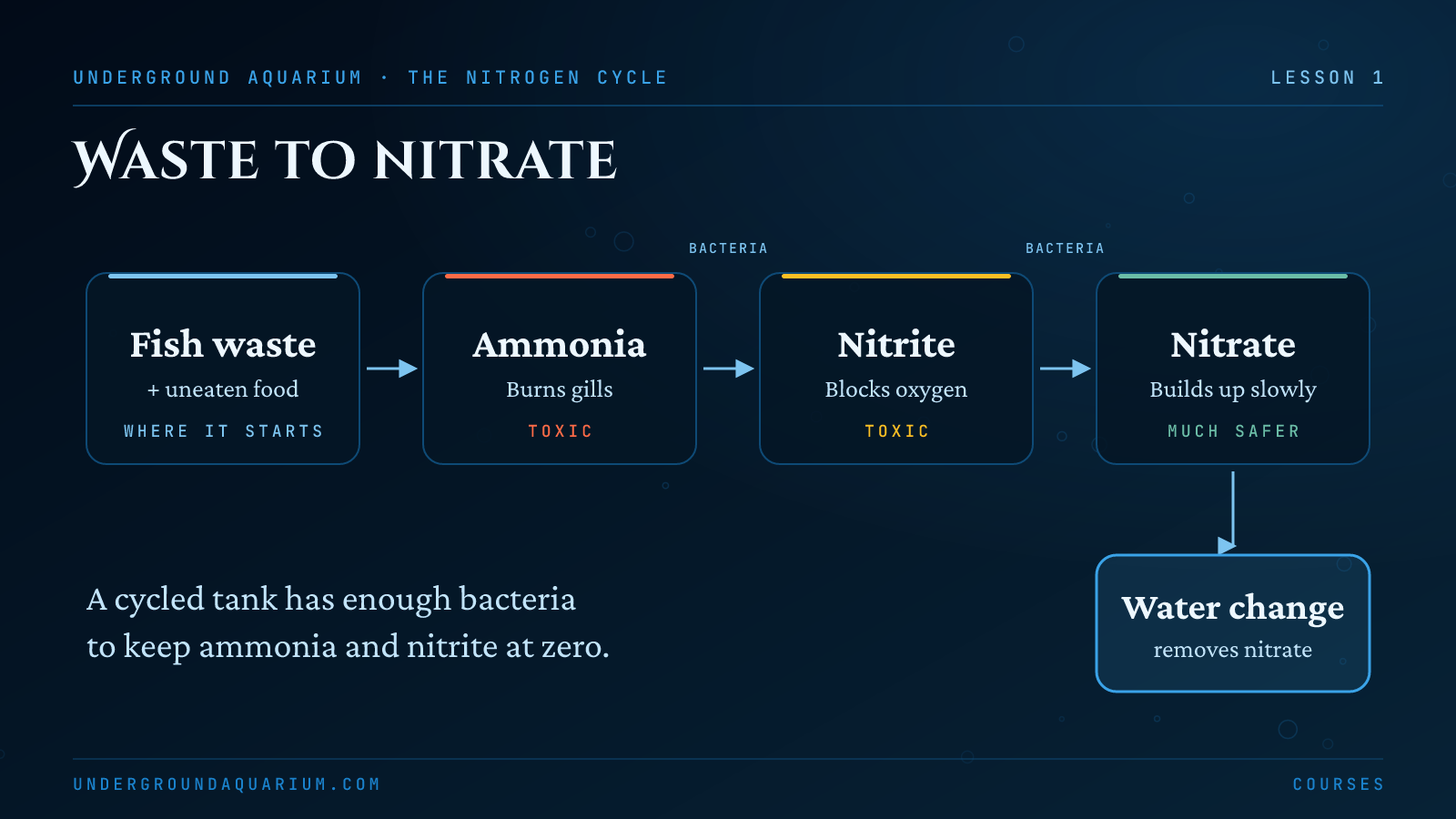
Every fish tank runs on bacteria you can't see. Those bacteria turn deadly fish waste into something much safer, and the process is called the nitrogen cycle.
It starts with ammonia. Fish give off ammonia through their gills and in their waste. Uneaten food, dead plant leaves, and anything else rotting in the tank adds more. Ammonia burns gills and skin, and even small amounts stress fish.
Bacteria turn ammonia into nitrite. A group of bacteria living on your filter media, gravel, and decorations eats ammonia and gives off nitrite. Nitrite is still toxic. It stops fish blood from carrying oxygen, so fish gasp at the surface even when the water is full of air.
More bacteria turn nitrite into nitrate. A second group eats the nitrite and gives off nitrate. Nitrate is far less harmful, but it builds up over time. Water changes remove it, and live plants use some of it as food.
That's the whole loop: waste, ammonia, nitrite, nitrate, water change. A "cycled" tank is one with enough bacteria to handle all the ammonia your fish make, every day, so ammonia and nitrite always read zero.
Where the bacteria live: almost all of them grow on surfaces, not floating in the water. Your filter media is the biggest home they have, which is why how you treat your filter matters so much (Lesson 7).
Sign in to take the quizzes and earn your certificate.
Sign in to continue